Mathematics Vision
Maths Vision
Mathematics is a life skill that equips us to make sense of the world around us by connecting knowledge from past and present experiences. These skills are essential to our everyday life, vital to science, technology and engineering, and necessary for financial literacy and most forms of employment. Our vision for Parkhill Junior School is for all children to become efficient mathematicians who are passionate, excited and are willing to take risks and challenge themselves to achieve their full potential and view themselves as High Performing Learners. (Article 28 – Every child has a right to an education). Through practice, we believe that our pupils will develop the ability to become competent learners. All pupils are fluent in mental and written calculations and are able to use a range of strategies to solve problems. At Parkhill Junior School, resources are key to children’s development of mathematical skills as they facilitate the learning for our pupils and help them to develop a deep understanding of the subject through a concrete, pictorial and abstract approach. Through daily maths lessons, children are able to become fluent in calculations and are able to reason, slef-correct and explain clearly, their reasoning. Pupils also have the opportunity to use their enquiry skills when solving complex problems and learning through the trial and error method which enables them in reflecting, reasoning, justifying and applying their learnt knowledge to solve problems (Article 13 – Every child has the right to say what they think.).At Parkhill Junior School, we want our children to be enthusiastic learners who are curious, willing to learn, take risks and to never give up by believing in themselves.
Maths at Parkhill
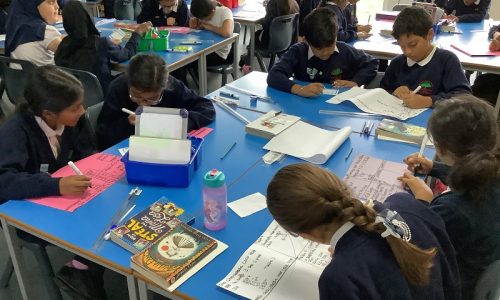
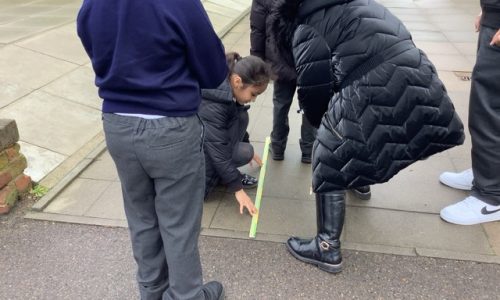
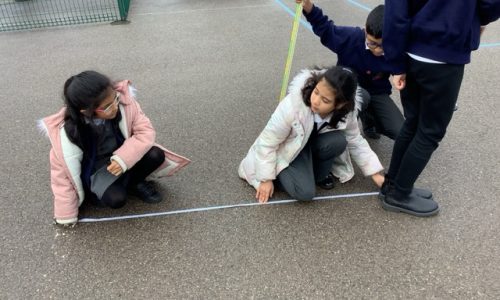
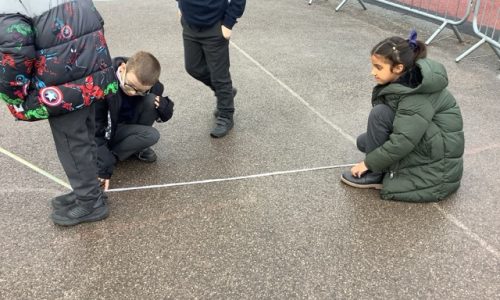
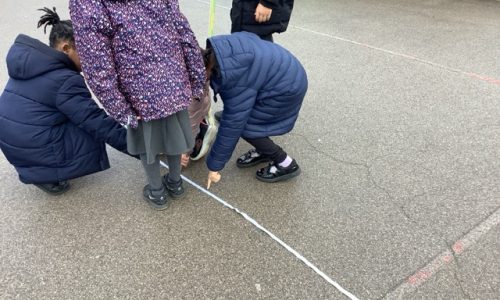
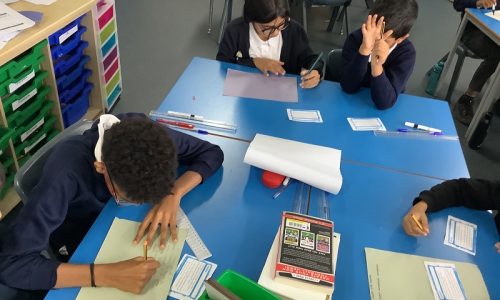
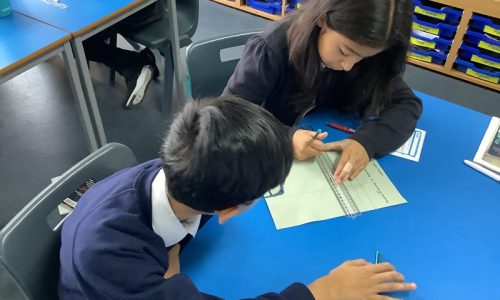
Our young mathematicians have been busy developing their fluency and problem‑solving skills through a range of exciting, hands‑on activities. Working collaboratively, they practised key mathematical concepts, applied their knowledge in different contexts, and tackled challenging problems using logical thinking and reasoning. Through discussion, exploration, and perseverance, they demonstrated confidence, resilience, and a positive attitude towards learning maths. It has been wonderful to see them actively engaged, thinking critically, and enjoying the challenge of becoming successful mathematicians.

Mrs Nayak
Mrs Nayak
Maths Lead
My passion for maths truly developed when I became a teacher. Often I would hear children claiming ‘I just can’t do maths.’ However, there is no escaping mathematics; it is everywhere from cooking to telling the time to understanding why cylinders are the best shape for wheels on a car. Nevertheless, sometimes people often feel ‘stuck’ with maths, which in itself is part of the beauty of the subject as it offers challenge. I believe to be a good mathematician all you need is resilience and a growth mindset. Maths is limitless and with the right frame of mind so is everyone’s ability to solve mathematical problems.